

Heyspin casino Plinko game
Introduction
When I look at Heyspin casino Plinko, I see a format that strips casino entertainment down to its bare essentials: one ball, a field of pegs, a line of multipliers, and a result that arrives in seconds. That simplicity is exactly why Plinko has become so noticeable across modern gaming platforms. It is easy to understand at first glance, but the actual session experience can feel very different depending on stake size, board setup, and especially the selected risk level.
For players in the United Kingdom, that matters. A lot of casino products promise quick action, but not all of them are transparent about how the pace, probability curve, and return pattern really work. Plinko is more open in one sense: you can literally see the ball bouncing toward a result. At the same time, that visual clarity can be misleading if a player assumes the path is somehow easier to read or influence than it really is.
In this review, I want to focus strictly on the game itself. Not the broader casino lobby, not payments, not Heyspin Casino registration with terms and limits flows. The real question is simpler and more useful: what does Plinko at Heyspin casino actually offer a player, how does it behave in practice, and what should you understand before placing even a small bet?
What Plinko is and why it attracts so much attention
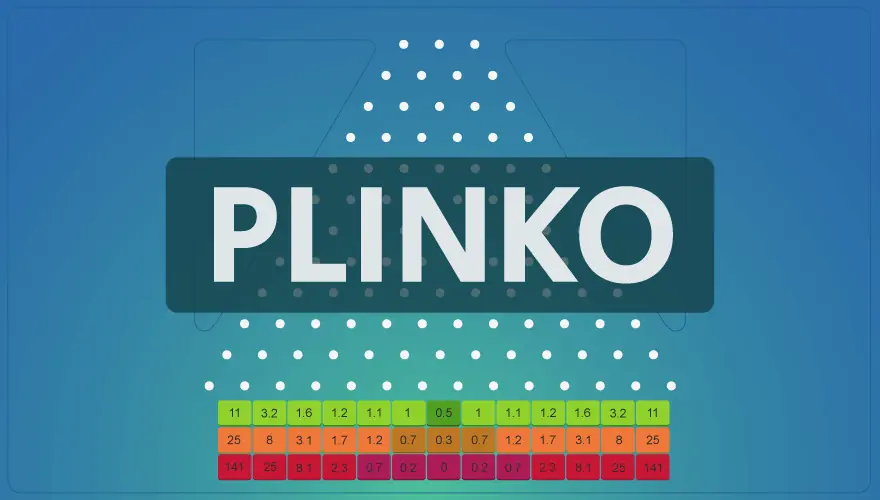
Plinko is a chance-based casino game built around a familiar visual idea. A ball drops from the top of the board, hits a series of pegs on the way down, and finally lands in one of several slots at the bottom. Each slot carries a multiplier. If the ball lands in a low-value slot, the return is modest or below the stake. If it reaches a rare edge slot with a high multiplier, the result can be much larger.
That description sounds almost too simple, and that is part of the appeal. Unlike a classic slot, Plinko does not ask the player to process paylines, symbols, Heyspin Casino bonus page icons, scatter combinations, expanding reels, or side features. The interface is usually clean. You choose a bet, set a risk profile, sometimes adjust the number of rows, and release the ball.
What makes the format stand out is the combination of instant readability and emotional tension. The result is not hidden inside a spin animation with several layers of presentation. You watch the path unfold in real time. Even though the outcome is still random, the bouncing motion creates a sense of suspense that feels more physical than what many slot sessions provide. Anyone stuck on account verification can follow the steps laid out in Sweet Bonanza slot information for Heyspin Casino players.
I think this is one of the most important reasons Plinko became so visible. It is not just “easy”; it is spectator-friendly. A person can understand the premise in seconds, which is why the format translates well to streaming clips and quick gameplay sessions. But visibility should not be confused with simplicity of outcome. The rules are simple. The result profile can be harsh.
A useful observation here is that Plinko often feels fairer than it feels gentle. You can see the board. You can see the possible multipliers. You know where the extreme outcomes sit. Yet that transparency does not make the session softer. In fact, it can make dry stretches more obvious because there is nowhere for the game to hide.
How the core Plinko mechanic works at Heyspin casino
At Heyspin casino, the Plinko experience follows the standard logic of the format: the player selects a stake, chooses a risk setting, and in many versions can also choose the board height or number of rows. Once the ball is released, it collides with pegs and moves left or right until it reaches a multiplier slot.
On the surface, the process looks almost mechanical in a physical sense, but in online casino terms it is still governed by random number generation. The path is displayed visually, yet the result is not something a player can predict by timing the drop or reading the board. That distinction is essential. The animation shows the journey; it does not create a skill layer.
Most Plinko versions revolve around three variables:
- Stake size — this determines the monetary value of the result.
- Risk level — this changes how the multiplier distribution is structured.
- Rows or board depth — this affects the spread of possible landing zones and the overall shape of results.
The practical effect of these settings is much more important than the menu labels suggest. A player who changes from low risk to high risk is not just making the session “more exciting.” They are fundamentally changing the expected rhythm of outcomes. Low-risk boards usually produce more frequent small or mid-range returns, while high-risk setups compress more value into rare top multipliers and leave a larger share of drops returning less.
| Setting | What it changes | What it means in a real session |
|---|---|---|
| Bet amount | Cash value of each result | Higher emotional pressure and faster bankroll swings |
| Risk level | Distribution of multipliers | Can shift the session from steady to highly uneven |
| Rows | Board width and path complexity | Often increases spread between common and rare outcomes |
One detail many players underestimate is how much the bottom-row layout defines the whole experience. The centre slots are usually the most common landing zones, while the highest multipliers sit near the edges, where the ball reaches less often. That means the board is not simply random in a flat sense. It is random within a weighted structure, and the structure usually favours modest outcomes over headline results.
Why the game feels so engaging despite its minimal design
Plinko creates engagement through rhythm rather than narrative. There is no story progression, no bonus round buildup, and usually no layered feature system. What keeps players involved is the short loop: choose settings, drop, watch the bounce, get the result, repeat. That loop is compact, but it can be surprisingly intense.
The first reason is clarity of anticipation. In a slot, suspense often comes from waiting for symbols to align. In Plinko, suspense is spatial. You can see the high multipliers at the edges and track whether the ball drifts toward them or back to the centre. That makes every drop visually legible, even for someone who has never played before.
The second reason is the way risk settings alter the emotional texture of the session. On a lower setting, the game can feel almost methodical, with many outcomes clustering around smaller multipliers. On a higher setting, the same board starts to feel sharper and less forgiving. The player may go through a longer stretch of underwhelming returns while waiting for a much larger hit that may never arrive during that session.
There is also a subtle psychological element that makes Plinko distinctive: near-miss perception is unusually strong here. When a ball bounces close to a top edge multiplier and then falls inward at the last moment, the disappointment feels more concrete than in many reel-based products. You do not just know you missed; you watched the miss happen step by step. For some players that is thrilling. For others it becomes tiring quickly.
That is one of the format’s most memorable traits. Plinko looks calm, almost toy-like, but the actual sensation can be more tense than the interface suggests. The board is simple. The waiting is not.
Risk levels, probability patterns and what they mean for the player
If there is one area a player needs to understand before trying Heyspin casino Plinko, it is this one. The game’s appeal often rests on the possibility of landing a large multiplier, but the route to that result is shaped by probability in a very uneven way.
The distribution curve is not perfectly symmetrical in every configuration, so a slightly left-of-centre or right-of-centre bias can shift where the densest cluster of outcomes lands. Players who track a session's results may notice a temporary run of extreme values, yet the underlying probabilities reset with each fresh round rather than adjusting to compensate. A sensible approach is to treat the visible multiplier range as a guide to possible outcomes, not a promise, and to set a stake level that tolerates a long stretch of middling results before the rarer peaks appear.
Risk settings intensify or soften that imbalance:
- Low risk usually narrows the gap between common and rare results. The session may feel steadier, though top-end potential is lower.
- Medium risk often gives a more mixed profile, with some balance between frequency and upside.
- High risk tends to create long stretches of weak outcomes in exchange for a small chance at a very large multiplier.
What does this mean in real use? It means a player should not judge Plinko by a handful of drops. The format can produce clusters. You may see several middling results in a row, then a long dry run, then one strong hit that reshapes the whole short-term picture. That is why bankroll management matters even in a game that looks casual.
Another important point: high visibility does not equal high control. Because the player watches the ball move through the pegs, there can be an illusion that the process is more readable than a slot spin. It is not. The board gives visual drama, not predictive leverage.
I would put it this way: Plinko is a game where the randomness feels personal because you can see it. That can make good runs feel earned and bad runs feel sharper, even though the underlying logic remains chance-driven.
How session tempo works in practice
Plinko is often described as a fast game, and that is broadly true, but the more accurate point is that it offers a controllable tempo. A single result arrives quickly, yet the player often decides how fast to repeat the cycle. This is different from some slots where long animations, bonus sequences, or reel effects naturally slow the pace.
At Hey spin casino, this matters because the short round structure can influence behaviour. A player can move through many drops in a brief period without fully noticing how quickly small losses accumulate. That is especially relevant on higher risk settings, where a sequence of weak returns may come faster than expected.
From a practical perspective, the game rhythm depends on three things:
- how quickly the player repeats drops;
- whether auto-play or rapid repetition is available;
- which risk profile is selected.
Low-risk sessions can feel smoother because there are more modest returns mixed into the flow. High-risk sessions often feel faster emotionally, even if the time per drop is identical, because each result carries more tension and more disappointment when the ball settles in the lower-value zones.
One of the most useful things a player can do is treat Plinko as a pace-sensitive product. The game is not only about where the ball lands. It is about how many times you are willing to repeat the cycle before variance starts to dominate your session mood and bankroll.
| Session style | Typical feel | Main caution |
|---|---|---|
| Low-risk, smaller stakes | Calmer and more measured | Can still erode balance through repetition |
| Medium-risk, moderate stakes | Balanced but swingy | Results may look stable until variance appears suddenly |
| High-risk, larger stakes | Sharp, tense, volatile | Bankroll can move quickly in either direction |
How Plinko differs from slots and other casino games
Many players arrive at Plinko from slots, so this comparison is worth making carefully. The biggest difference is that Plinko removes layered presentation and exposes the result structure more directly. In a slot, value is wrapped inside symbols, lines, reels, and feature rounds. In Plinko, value sits openly at the bottom of the board.
That changes how the game is experienced.
In slots, part of the appeal comes from variety: themes, bonus rounds, free spins, reel modifiers, symbol collections, and progression effects. Plinko offers almost none of that. Instead, it focuses on repeatable suspense. If a player wants changing visuals and frequent feature variety, a classic slot often does a better job. Anyone stuck on account verification can follow the steps laid out in VIP program checklist. Players who value quick withdrawals will find real timings in Heyspin Casino blackjack tips.
If, however, a player prefers a more stripped-back chance model, Plinko has a clear advantage. There is less interpretive noise. You do not need to learn paylines or wonder how a bonus trigger interacts with a multiplier layer. The board tells you where the value is. The uncertainty comes from whether the ball gets there.
Compared with table games, Plinko also sits in an unusual middle ground. It does not involve decision depth like blackjack, nor social rhythm like live roulette. But it feels more immediate than many instant-win products because the ball’s path creates a visible event rather than an instant number reveal. For a closer look at the games library, returning player bonus codes review for UK players sorts the titles by theme and pace.
Here is the simplest way I would frame it:
- Compared with slots: less decorative, more transparent, usually more repetitive by design.
- Compared with roulette: less formal, more visual in motion, but still heavily chance-led.
- Compared with crash-style products: less about timing decisions, more about accepting a fixed random outcome.
This is why Plinko divides opinion. Some players see elegant simplicity. Others see limited depth. Both reactions are valid.
Strengths and weak points of the format
After spending time with Plinko-style products, I think the strongest aspect is not just accessibility. It is the way the game makes probability feel visible. Even if a player does not think in mathematical terms, they quickly understand that the centre is safer, the edges are rarer, and the risk setting changes the session character. That is a genuine design strength.
The second major plus is speed of comprehension. A newcomer can understand the premise almost instantly. That lowers friction and makes the game approachable without long explanation screens.
The third strength is session flexibility. Players can often shape the experience with board depth and risk profile. That does not turn the game into one of skill, but it does allow a more tailored style of play than many people expect.
Still, the limitations are just as real.
The most obvious one is repetition. Because the loop is so compact, some players lose interest quickly. There are no evolving stages, no feature ladders, and usually no meaningful sense of progression beyond changing settings.
The second weakness is that high-risk play can create a distorted expectation. The board shows big multipliers so clearly that players may overfocus on them, even though the structure strongly favours ordinary outcomes. This is not a hidden flaw; it is built into the format. But it can still catch inexperienced players off guard.
The third issue is emotional fatigue. Watching many drops land in low-value zones can feel more frustrating than a string of quiet slot spins, because Plinko visually stages the disappointment. The game does not merely tell you the result. It makes you watch it arrive.
Who Plinko suits and who may prefer another format
Plinko at Heyspin casino is best suited to players who value directness. If you like seeing the possible outcomes clearly, want a short decision cycle, and do not need elaborate bonus architecture, the format can be very satisfying. It also works well for people who prefer to control the tone of a session by adjusting risk rather than changing to an entirely different category of casino product.
I would say Plinko is a good match for:
- players who enjoy fast, readable rounds;
- users who want a simple interface without slot complexity;
- people comfortable with variance and short result cycles;
- those who appreciate visual suspense more than thematic presentation.
It may be a poor fit for:
- players who want narrative, symbols, and feature-rich gameplay;
- those who expect long sessions from a small balance without discipline;
- users who are easily drawn into chasing rare top multipliers;
- anyone who prefers strategic input over pure chance.
This is where the difference between appearance and substance matters most. Plinko looks light. In reality, it can be a demanding format if your temperament does not suit repeated, high-speed random outcomes.
What to check before launching a Plinko session
Before starting a session on Hey spin casino, I would recommend paying attention to a few practical points. These are not cosmetic details. They directly shape the experience and can change whether the game feels controlled or chaotic.
- Check the risk setting first. Do not treat this as a minor preference. It is the backbone of the session profile.
- Look at the multiplier distribution. See where the high values sit and how wide the low-return centre is.
- Start with a modest stake. Plinko can move quickly, and small bets give you time to read the rhythm.
- Use demo mode if available. It helps you understand the pace without financial pressure.
- Set a session limit early. Short-round formats can make repetition feel harmless when it is not.
I would add one more practical note that often gets ignored: watch how the game makes you feel after ten or twenty drops, not after one lucky result. Plinko can be judged badly if a player focuses only on a single high multiplier or one disappointing sequence. The real question is whether the format’s rhythm suits your style over time.
That is also where experienced players usually separate themselves from impulsive ones. They do not ask only, “Can this board hit big?” They ask, “Do I actually like the pattern of waiting this board creates?”
Final verdict on Heyspin casino Plinko
Heyspin casino Plinko offers one of the clearest examples of a modern casino format that looks simple but plays with more tension than its appearance suggests. The concept is easy to grasp: drop a ball, follow the bounce, land on a multiplier. But the practical experience depends heavily on risk level, board setup, repetition speed, and the player’s own tolerance for uneven results.
Its key strengths are obvious once you spend time with it. The interface is direct. The result structure is visible. The rounds are quick. The suspense is immediate. For players who are tired of cluttered slots and want a more stripped-back chance format, Plinko can feel refreshingly honest.
Its weak points are just as important. The game can become repetitive. High-risk settings can be unforgiving. Rare top multipliers are easy to notice and easy to overvalue. And because each drop resolves quickly, bankroll pressure can build faster than the calm design implies.
So, is it worth trying? In my view, yes — if you approach it with the right expectations. Plinko is not a substitute for every other casino game, and it is not designed to satisfy every type of player. It suits those who enjoy visible randomness, short rounds, and adjustable intensity. It is less suitable for players who want strategic depth, long-form feature play, or a softer emotional rhythm.
The clearest conclusion is this: Plinko at Heyspin casino is compelling not because it is complicated, but because it turns a very simple setup into a sharply felt session experience. That is its real strength. The caution is that the same simplicity can hide how quickly variance takes over. If you understand that before you start, you are much more likely to decide whether this format genuinely fits your style.
FAQ
How does Plinko work in real-money play?
A ball is released from the top and drops through pegs into numbered slots to award the corresponding multiplier. Each round follows the game physics and the result is calculated from where the ball lands.
What risk level should be expected from Plinko multipliers and volatility?
Plinko rounds can produce a wide spread between small and large multipliers. Higher volatility settings generally mean bigger swings, so bet sizing matters more than with steady games.
What should be checked before launching Plinko with a new bet amount?
Confirm the stake and any active bet settings are correct before releasing the next ball. Also verify whether the session is in demo mode or real-money play so results match the expected account balance.